


How to Make Tteokbokki (Spicy Korean Rice Cakes) A Beginner-Friendly Recipe

Table Of Content
- Why This Tteokbokki Recipe Works
- What Are The Ingredients You’ll Need To Make Authentic Ttoekbokki At Home?
- What Are The Step-by-Step Cooking Instructions To Make Ttoekbokki At Home?
- Step 1: Prepare the Rice Cakes
- Step 2: Make the Broth
- Step 3: Build the Sauce
- Step 4: Simmer the Tteokbokki
- Step 5: Finish and Serve
- What Are All The Common Mistakes You Must Avoid As A Beginner?
- What Are Some Popular Variations Of Tteokbokki?
- Why Tteokbokki Appeals to Indian Cooks
The first time I tried tteokbokki was not in a Korean street market, but in my own kitchen.
I had seen it countless times in K-dramas, with characters huddled around steaming bowls of spicy rice cakes, and I wanted to experience it myself.
Like many beginners, I was nervous, would I be able to get the chewy texture right?
Would the sauce taste authentic? To my surprise, with the right ingredients and method, it turned out not only possible but deeply satisfying.
Tteokbokki is one of Korea’s most iconic street foods. It’s a dish built on garaetteok (cylindrical rice cakes) simmered in a sauce made from gochujang (fermented chili paste), a little sugar, and broth.
Korean food authorities like Maangchi and Korean Bapsang often emphasize that while it looks fiery, the balance of sweet, spicy, and savory is what makes tteokbokki comforting rather than overwhelming.
This guide is written for first-time cooks, so every step is simplified without losing authenticity.
Why This Tteokbokki Recipe Works
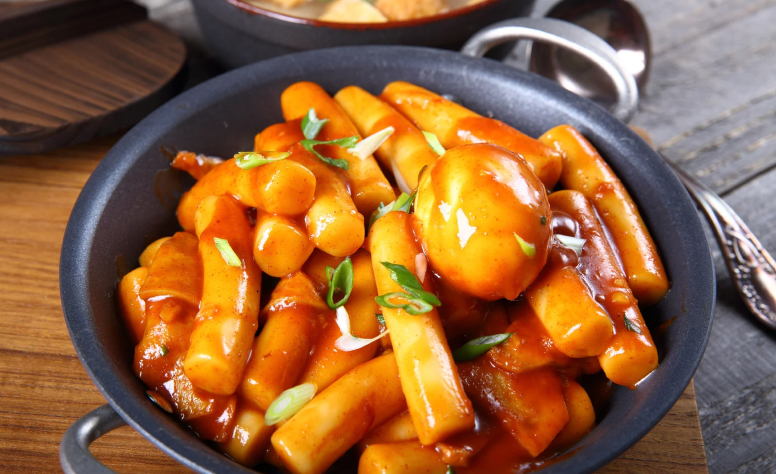
At its heart, tteokbokki is about texture and sauce harmony. Many beginners make the mistake of just boiling rice cakes in chili paste, which results in uneven flavoring or mushy rice cakes.
This recipe works because:
1. Soaking Rice Cakes Correctly – Korean rice cakes are dense when bought fresh or frozen.
Soaking them in warm water for 10–15 minutes softens the surface and prevents clumping.
Maangchi, a respected Korean home cook, always recommends this step to achieve the signature chewy consistency.
2. Layering Flavors in the Sauce – Instead of just adding gochujang, this recipe uses a base of anchovy or kelp broth.
According to Korean Bapsang (run by Hyosun Ro, a Korean-American cooking expert), this light stock provides the umami depth that keeps the dish from being flat.
If anchovies aren’t available, vegetable broth is a reliable alternative.
3. Controlled Heat and Simmering – Tteokbokki is simmered gently, not boiled hard.
This allows the sauce to thicken gradually and coat each rice cake evenly.
Too much heat makes the sauce reduce too quickly, leaving sticky clumps instead of glossy rice cakes.
4. Customizable Add-ins – Street stalls in Seoul often add fish cakes, cabbage, scallions, or boiled eggs.
This recipe includes them as optional, so beginners can start simple or build complexity.
By following these principles, even first-timers can get restaurant-quality results at home.
What Are The Ingredients You’ll Need To Make Authentic Ttoekbokki At Home?
- 300g tteok (Korean cylindrical rice cakes) – fresh or frozen
- 3 cups anchovy broth (or substitute with vegetable broth if vegetarian)
- 3 tablespoons gochujang (Korean red chili paste)
- 1 tablespoon gochugaru (Korean red chili flakes) – optional for extra spice
- 1 tablespoon soy sauce
- 1 tablespoon sugar (white or brown)
- 2 garlic cloves, minced
- 1 sheet eomuk (Korean fish cake) – sliced into strips (optional)
- ½ small onion – thinly sliced
- 1 boiled egg – halved (optional)
- 1 stalk green onion – chopped for garnish
What Are The Step-by-Step Cooking Instructions To Make Ttoekbokki At Home?
Step 1: Prepare the Rice Cakes
If your rice cakes are frozen, just soak them in warm water for about 10 to 15 minutes until they’re nice and soft.
After that, make sure to drain them well before cooking. This little step helps them cook more evenly and keeps them from sticking together!
Step 2: Make the Broth
To create a flavorful base for your sauce, start by simmering 2–3 dried anchovies along with a piece of dried kelp (about 4×4 cm) in 3 cups of water for about 10 minutes.
After that, strain the mixture and discard the solids. If you don’t have anchovies on hand, you can easily substitute them with vegetable broth.
This method adds that rich, authentic depth that’s reminiscent of Korean street food!
Step 3: Build the Sauce
Add the broth back into the pot and stir in gochujang, gochugaru, soy sauce, sugar, and garlic.
Mix well until the paste dissolves. The sauce should be bright red and slightly sweet-smelling.
Step 4: Simmer the Tteokbokki
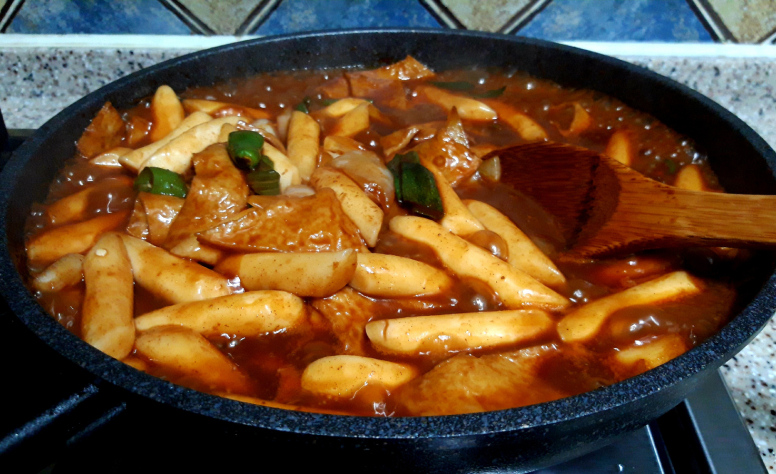
Add the soaked rice cakes, onion slices, and fish cake (if using). Let everything simmer on medium heat for about 8–10 minutes, stirring occasionally.
The sauce should thicken and coat the rice cakes.
Step 5: Finish and Serve
Once the sauce has reduced to a glossy coating, add boiled eggs (if using) and garnish with chopped green onions.
Serve hot in a shallow bowl, it’s best enjoyed immediately while the rice cakes are soft and chewy.
What Are All The Common Mistakes You Must Avoid As A Beginner?
If you skip soaking the rice cakes, you might end up with a batch that’s unevenly cooked and hard.
Using just water for your sauce can make it taste flat and one-dimensional, so it’s worth using broth for a deeper flavor.
Be careful not to over-reduce the sauce; if you simmer it too aggressively, it can dry out your dish.
And when it comes to gochugaru, remember that its heat can build gradually, so it’s best to taste as you go before adding more!
What Are Some Popular Variations Of Tteokbokki?
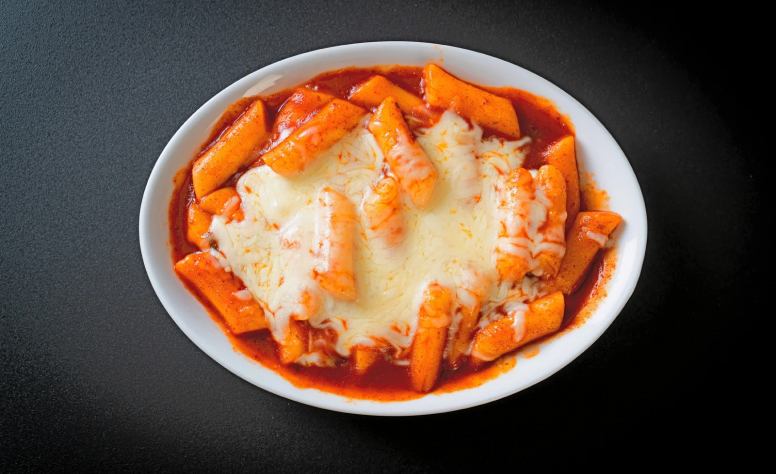
Cheese Tteokbokki – Popular in Korean cafés, a slice of mozzarella is melted on top just before serving.
Rabokki – A combination of ramen noodles and tteokbokki, loved by students for its heartiness.
Seafood Tteokbokki – Shrimps, mussels, or squid add depth and make it a full meal.
Why Tteokbokki Appeals to Indian Cooks
Indian palates already enjoy bold, spicy, and sweet flavors, which makes tteokbokki relatable.
The chewy rice cakes mirror the comfort of Indian snacks like aloo tikki or fried pakoras but with a different texture.
The ingredients, once considered niche, are now available in Indian metros at specialty Korean stores or online platforms like
- Lotte Mart
- Amazon India
- Local Asian grocers
Making tteokbokki at home is not just about following a recipe, it’s about understanding balance.
The chewiness of the rice cakes, the depth of the broth, and the sweetness of the sauce come together to create something that feels indulgent yet approachable.
The more you cook it, the more confident you’ll get in adjusting spice levels and experimenting with toppings.
As Maangchi often says in her cooking videos, “Tteokbokki is best enjoyed with friends around a hot pan.” Even if you’re cooking it for the first time, it’s a dish that turns out surprisingly rewarding and addictive.
MORE TO EXPLORE:
Share This Article:


RELATED POST