
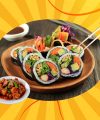


11+ Korean Veg Dishes That You Need To Try ASAP!

Table Of Content
- Easy Korean Veg Dishes To Try Now
- 1. Gamjajeon
- 2. Hobak Buchim
- 3. Hobak Mandu
- 4. Gamja Joriim
- 5. Kimchi Soondooboo Jeongol
- 6. Steamed Kimchi Buns
- 7. Kkanpoong Tofu
- 8. Cauliflower Congee
- 9. Budae Jjigae
- 10. Vegetarian Japchae
- 11. Fried Enoki Mushrooms
- 12. Beoseot-deulkkae-tang
- 13. Hobakjuk
- 14. Korean Soy Wrap
- 15. Kongguksu
- My Takeaway
Hello, my lovely Hallyu peeps! I have come here to write about a topic that maybe most of you need.
A friend of mine told me yesterday that she won’t be able to eat good Korean food anymore, as she is turning vegan this year.
Then I asked her why she thinks so. I asserted that there are many Korean veg dishes, or vegan dishes, per se, which anyone will devour.
She didn’t quite believe me, so I gave her a list of the very best and delicious Korean veg dishes, or Korean Vegan Dishes.
And guess what? I am going to give you the same list as well! In this article, I will talk about the variety of Korean cuisine and how much diversity it holds.
I will give you a list of 11+ Korean Veg Dishes, so buckle up!
Easy Korean Veg Dishes To Try Now
Here it is, you guys! For all of you who are turning vegan or maybe opting for trying out Korean veg dishes for a change, I have listed out some amazing and delicious options for you.
1. Gamjajeon
A lot of you might ask, “Is Gamjajeon vegan?”
Well, the answer is a hundred percent yes. Gamjajeon is completely vegan, and it tastes heavenly!
Gamjajeon is a traditional Korean dish. It is a savory pancake made primarily from finely chopped or grated potatoes.
The name “gamjajeon” originates from “gamja,” meaning potato, and “jeon,” which refers to a type of pancake in Korean cuisine.
This dish is very popular in Korea as a snack, side dish, or drinking snack. Its simple recipe and great taste make it a favorite in Korean cuisine.
2. Hobak Buchim
Korean Zucchini Pancakes, also known as Hobak Buchim, are crispy and savory vegetable pancakes that are easy to prepare.
This dish showcases traditional Korean home cooking by utilizing fresh, healthy ingredients and combining different textures.
It also pairs well with a tangy dipping sauce. You’ll enjoy this tasty way to serve zucchini!
3. Hobak Mandu
As you have already guessed, Hobak means Zucchini, and yes, I am talking about Zucchini mandus.
This summer dish features rectangular mandu, which are dumplings filled with summer squash, golden oak mushrooms, and cucumbers.
First, boil the mandu, then serve them in a cold broth. For the filling, use thin slices of salted summer squash, drained, mixed with finely minced golden oak mushrooms.
To make the mandu skin, roll out a thin dough and shape it into a rectangle before boiling the mandu in hot water.
4. Gamja Joriim

Gamja jorim is a dish made by braising potatoes. It is a common side dish enjoyed at home and in restaurants, often included in packed lunch boxes.
Jorim means cooking the main ingredient in a sauce until it thickens. For this dish, you simmer the potatoes in a sweet, soy sauce-based mixture.
It is a filling and affordable dish that many people grew up with. You can use any type of potato, but firmer varieties, such as white or Yukon gold, work best because they retain their shape.
Red, fingerling, and new potatoes are also good options. You can keep the skins on if you prefer.
If you choose starchy potatoes, such as Russet, rinse and soak them in water for a few minutes. After this step, you can cut them into cubes. This step helps remove some of the starch.
5. Kimchi Soondooboo Jeongol
We have all heard of Kimchi Jjigae, Budae Jjigae, etc., right? Well, these are all variations of a filling soup, and so is this one.
Kimchi Soondooboo Jjigae is a Korean veg recipe that talks of a soup, where Tofu is the primary ingredient.
And of course, you will have to use Kimchi. But hey, how will you use Kimchi that has fish sauce in it???
Well, don’t panic, cause you’ve got you. I will share the ultimate recipe for Korean vegan Kimchi in this very article. Keep reading, folks!!
6. Steamed Kimchi Buns
As the name suggests, you use the same vegan Kimchi here and put that into a hot steamed bun as a filling.
You can also add other ingredients, such as scallions and minced mushrooms.
7. Kkanpoong Tofu
Spicy and Crunchy Tofu? That too braised in a Garlicky sauce? Yes, yes, and yes. This recipe is my weekend staple, I must say.
Press the extra-firm tofu to remove excess liquid. This will make your tofu chunks crispy. Use potato starch instead of cornstarch or flour.
This keeps the dish gluten-free and makes the tofu extra crunchy. Don’t let the crunchy tofu sit in the sauce for too long before serving.
Wondering why? That’s because the longer it sits, the softer it becomes. Serve it with rice — this dish is spicy!
8. Cauliflower Congee
Just your regular Chicken congee, but vegan, as it is made with cauliflower. You can add some extra Tofu for protein, if you want!
Congee has always been my comfort meal. Although Conjee is primarily made with chicken, I have also tried making it with cauliflower to create a vegan option. And it works!
Cauliflower congee can be made similarly to traditional congee. Cauliflower rice is simmered in broth until it softens and thickens. You can use vegetable broth here.
It can be seasoned with various spices, herbs, and toppings to create different flavor profiles. Common additions include garlic, ginger, salt, pepper, fish sauce, sesame oil, and fresh herbs like cilantro and green onions.
9. Budae Jjigae

Budae Jjigae, or army stew, is one of my favorite Korean veg dishes ever. it is a hearty, spicy stew that originated in South Korea after the Korean War.
It features a mix of Korean and American ingredients, including things like Spam, sausages, kimchi, ramen noodles, and baked beans.
The stew is typically cooked in a large pot and shared by multiple people, making it a popular communal dish, especially during colder months.
10. Vegetarian Japchae
Vegetarian Japchae is a Korean dish consisting of stir-fried sweet potato glass noodles and various vegetables, with a savory and slightly sweet flavor profile.
It’s a popular dish in Korea and is enjoyed for its chewy noodles, colorful vegetables, and rich, sesame-forward sauce.
I know what you are thinking! Traditional Japchae often includes meat!! Well, not to worry at all. For a Vegetarian version, replace it with mushrooms, tofu, or other plant-based protein sources.
11. Fried Enoki Mushrooms

Fried Enoki mushrooms are a popular snack or appetizer where enoki mushrooms, known for their long, thin strands, are coated in a batter and deep-fried until crispy.
The resulting dish is characterized by a delightful contrast between the crispy exterior and the tender, slightly chewy interior.
Enoki mushrooms are commonly used in Japanese and Korean cuisine and offer a mild, slightly nutty flavor.
12. Beoseot-deulkkae-tang
Beoseot-deulkkae-tang is a Korean mushroom soup, specifically a perilla seed powder soup, featuring a variety of mushrooms and a rich, nutty broth.
The perilla seed powder gives the soup a creamy texture and distinct flavor, while the mushrooms and other ingredients contribute to its savory taste and nutritional value.
13. Hobakjuk
Hobakjuk, also known as pumpkin porridge, is an age-old Korean dish made with pumpkin and glutinous rice flour.
It is a smooth, naturally sweet porridge. Generally, the elderly or the recovering patients enjoy it. It’s also known for its creamy texture and can be served warm or cold.
Hobakjuk is a popular dish in Korean cuisine. The Koreans often associate this dish with comfort and nourishment.
It’s traditionally enjoyed during the fall and winter months, and it’s also given to those who are recovering from illness or surgery.
14. Korean Soy Wrap
Korean soy wraps, also known as Ssam, are a dish where various cooked foods, often meat, are wrapped in a leafy vegetable, typically lettuce or perilla leaves.
However, you can add Tofu here, which is a great vegan alternative.
You can enjoy these wraps with a flavorful dipping sauce, such as ssamjang, a mixture of fermented soybean paste (doenjang), chili paste (gochujang), and other seasonings.
The wraps are a popular way to eat Korean BBQ, where you grill the meat and then wrap it with rice, kimchi, garlic, and ssamjang.
15. Kongguksu
Kongguksu is a Korean dish consisting of thin wheat noodles. You can serve in a chilled, creamy, and nutty broth. You can make the broth from ground soybeans.
It’s a popular summer dish because it’s very refreshing and has a lot of nutritious qualities. It is one of the most popular Korean veg dishes during the summer.
My Takeaway
You see, I am a meat lover. No doubts about it. However, I have tried each and every one of these dishes, and they taste awesome!
I would love it if you all had more dishes to add. Also, give these dishes a try, even one. Let me know about your feedback in the comments below!
YOU MAY ALSO LIKE:
Share This Article:


RELATED POST