
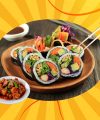


Satiate Your Indian Tastebuds With These Top Korean Food With Rice Recipes

Table Of Content
- What Do Koreans Eat With Rice?
- Korean Food With Rice: What Kind Of Rice Is Popular In Korea?
- What Are The Best Options For Korean Food With Rice?
- 1. Kimchi Bokkeumbap
- 2. Nurungji
- 3. Boribap
- 4. Hoedeopbap
- 5. Ogokbap
- 6. Kongnamulbap
- Korean Rice Dishes Tweaked To Perfection
- 1. Garaetteok
- 2. Nude-Gimbap
- 3. Baekseolgi
- 4. ChungmuGimbap
- 5. Injeolmi
- 6. SamgakGimbap
- 7. Gimbap
- Do Korean Food With Rice Or Korean Rice Dishes Appeal To Indian Tastebuds?
- Korean Food With Rice: Are These Korean Rice Dishes Healthy?
Hello, my lovely Hallyu peeps! I recall that when I wrote the article about Korean summer desserts, all my friends were extremely happy.
Moreover, one of them even told me that she tried all of them in three days! To sum it up, I received numerous compliments. However, there was one complaint.
Someone told me he liked Korean desserts, but he actually didn’t order the main course from the Korean cuisine. He said that there were not enough options for Korean food with rice.
Blasphemy! I argued assertively that there is absolutely no dearth of Korean food with rice recipes; you are just too lazy to look for them.
Therefore, I just decided to write an anti-article about it. In this article, I will take you on a brief journey through the world of Korean food with rice, where you can carefully examine each recipe and give them a try!
What Do Koreans Eat With Rice?
Where should I start? There are many Korean food recipes with rice that people are often unaware of.
This doesn’t mean I’m not a fan of Gimbap or Bibimbap. I absolutely love them. In fact, I had pork Bibimbap for dinner last night.
All I am saying is that there are many more options you can choose from, which are pretty underrated as well.
Korean Food With Rice: What Kind Of Rice Is Popular In Korea?
I was completely unaware at the beginning that Korean rice is slightly different from what we use in India.
Now I know that Korean rice has shorter grains than rice from Southeast Asia, and it is much stickier. I personally think it also has a mild flavor that goes well with spicy soups and stews.
Although Korea has over 70% of its land covered in mountains, making rice farming difficult, rice has been a key ingredient in Korean food for a long time.
Koreans take their rice seriously and have two different words for it. They use 쌀 (ssal) for uncooked rice. When the rice is cooked, it is called 밥 (bap).
This is why many Korean dishes end with the word ‘bap’: it means that rice is a main component of the dish.
What Are The Best Options For Korean Food With Rice?
Ah! The master list begins here! I am going to share some of the best options for Korean food with rice, also known as Korean rice recipes, with you.
Before I dive straight into it, I would like to clarify that you won’t need any complex ingredients to cook these dishes. I will also list the ingredients required.
Additionally, I have made all these dishes myself. I have cooked these multiple times, and therefore, I can guarantee that they taste heavenly. Let’s get into it!
1. Kimchi Bokkeumbap
I really, really like Kimchi bokkeumbap. Why, you ask? Well, for starters, I think it’s a simple yet traditional South Korean dish.
Additionally, I use the combination of fried rice and kimchi. It’s a great way to use up leftover kimchi.
I constantly try to enrich the dish with additional ingredients such as
- Meat
- Vegetables
- Soy sauce
In most cases, I have seen many people who top kimchi bokkeumbap with a fried egg before serving.
However, I have personally garnished this dish with finely chopped green onions, gim, or sesame seeds,
It is very easy to prepare, inexpensive, and comforting. Therefore, the dish is one of the favorites of South Korean students.
2. Nurungji
Nurungji is the South Korean version of scorched rice. It is a crispy and nutty layer of golden-brown rice that forms at the bottom of the pan. I haven’t met anyone till now who hasn’t lived this one.
Moreover, this simple snack is prepared with pre-cooked rice, or it can be a by-product of cooking rice.
Furthermore, Nurungji can be enjoyed on its own, but it is often sprinkled with sugar and served as a dessert.
Optionally, the crust can be topped and shortly cooked with water or tea to create sungnyung—an infusion that is served after a meal and should be enjoyed as a drink.
3. Boribap
In its basic form, boribap is a South Korean dish that I enjoy, consisting of steamed rice and barley.
You can serve it with doenjang stew (fermented soybean paste) and a variety of side dishes called banchan.
The side dishes I typically have with Boribap are usually vegetarian. This can include various greens and vegetables (namul), often topped with gochujang or doenjang.
While there are expert restaurants where I can choose an elaborate meal with a selection of banchan, I also appreciate it served in a bowl.
I like it where the combination of rice and barley sits at the bottom, topped with different banchan. This is one of my favorite Korean food with rice.
4. Hoedeopbap
Hoedeopbap is one of the Korean food with rice that my mom taught me to make. This features raw fish and fresh vegetable slices on top.
I find it similar to the Japanese kaisendon but includes a sweet and spicy sauce made from gochujang (chili paste), vinegar, garlic, and sugar.
Furthermore, I usually choose fish such as salmon, tuna, sea bass, or halibut. These can be sliced or cut into thin strips for dishes like hoedeopbap.
I always want to make the best hoedeopbap, use only high-quality, fresh ingredients, and serve it well-chilled
5. Ogokbap
I mix Glutinous rice, or plain white rice, with four other grains and beans. I cook this together to make a traditional South Korean dish called Ogokbap. This is also known as five-grain rice.
The grains and beans used can vary by region, but typically include
- Glutinous millet
- Glutinous sorghum
- Red beans
- Black beans
Some recipes also use soybeans or chickpeas as an alternative.
In Korea, people typically prepare and eat this nutritious dish during the ancient holiday known as Jeongwol Daeboram.
Koreans also refer to this as the Great Full Moon Festival. It is a tradition to share this meal with neighbors.
Furthermore, Many folk beliefs are connected to this dish. People used to eat ogokbap to wish for three main reasons:
- Good harvest
- Good luck, health
- A peaceful life for their families
The dish has different names based on its ingredients or the traditions related to it. For example, it is called:
- Nongsabap – farming meal
- Boreumbap – full moon dish
- Ogokjapban – five-grain mixed meal.
Ogokbap is usually served with various nuts and cooked vegetable dishes called namuls.
6. Kongnamulbap
Kongnamulbap is a traditional Korean dish similar to Bibimbap. It features rice that you cook with soybean sprouts.
You can also add ingredients like ground meat (beef or pork), kimchi, garlic, and sesame oil for an extra layer of flavor.
While cooking, the rice absorbs the nutty and earthy flavors of the soybean sprouts. Once it is ready, you usually serve kongnamulbap with a sauce made from:
- Rice wine
- Soy sauce
- Black pepper
- Sugar
- Scallions
- Minced garlic
Korean Rice Dishes Tweaked To Perfection
Are we just going to talk about plain rice dishes? I mean, don’t get me wrong, I am not saying that the dishes I mentioned are basic. They are anything but basic.
However, I am referring to going beyond the basic and general presentation of rice, and let’s examine how Koreans incorporate rice into their daily cuisine:
1. Garaetteok
I would first say that this is a little different from the regular Ttoek or rice cakes that we have in Toekbokki.
Garaetteok are long and cylindrical Korean rice cakes that I often enjoy. Usually, I cut them diagonally into smaller round discs.
While you can savor them on their own, I love how their neutral flavor allows me to incorporate them into a variety of dishes easily.
I often add the sliced version to tteokguk soup. I use the thinner, whole cakes as the base for tteokbokki stew and spicy tteokkkochi skewers.
2. Nude-Gimbap
Nude Gimbap is a type of Korean rice roll. In this version, you have to wrap the toasted seaweed (gim) inside the rice, leaving the rice on the outside. This is why people call it “nude” Gimbap.
You can use common fillings such as vegetables, eggs, perilla leaves, carrots, pickled radishes, crab cakes, among others.
Before serving, you have to cut the rolls into bite-sized pieces.
3. Baekseolgi
I enjoy this traditional Korean rice cake, especially during special occasions. You can make it with rice flour, sugar, water, and salt.
I combine all these ingredients carefully and steam until the cake becomes light and chewy.
People often depict Baekseolgi as white, which I have heard symbolizes purity and innocence.
I think that’s why people usually make this dish to celebrate the hundredth day after a baby is born.
Though people traditionally served it without garnishes, I sometimes like to decorate it with dried fruit or nuts to add a bit of flair.
4. ChungmuGimbap
As the name suggests, this Gimbap originated in Chungmu. This place is now part of Tongyeong City.
I love these simple rolls. You can prepare these with rice that is wrapped in toasted seaweed. They’re usually thin and almost bite-sized.
Additionally, what I enjoy most is that they never include any other additions. I always serve this with radish kimchi and spicy squid.
Did you know the story of their origin? I find it quite fascinating, like the food itself. They say the wives of fishermen invented this plain version of Gimbap.
These wives wanted to provide their husbands with a nutritious lunch that wouldn’t go bad during the long days spent at sea.
5. Injeolmi
Injeolmi are traditional rice cakes from South Korea that you steam to perfection. To make them, you have to steam the rice and pound it into a soft dough.
You have to roll this dough and coat it with roasted soybean powder. There are different types, such as ssuk injeolmi, which contains mugwort powder, and kkaeinjeolmi, which you can coat in black sesame.
Legend has it that a commoner named Yim created these cakes and offered them to King Injo after fleeing Seoul during a rebellion.
To thank him, the king named the dish after Yim. Today, people mainly enjoy injeolmi on special occasions. They usually cut it into small rectangular pieces for serving.
6. SamgakGimbap
Samgak is a triangle-shaped variety of Gimbap—a South Korean rice roll. It consists of various fillings that you place inside a piece of triangle-shaped rice.
You can wrap these pouches in seaweed (gim) and cover them with a thin plastic wrapper. This allows the Gimbap to stay fresh for an extended period.
The Japanese onigiri, a similar triangle-shaped sushi variety, inspired the Korean Gimbap. However, the Koreans changed the fillings according to their taste.
Furthermore, it traditionally includes various combinations of kimchi, tuna, bulgogi, or gochujang paste.
7. Gimbap
Many people often compare Gimbap, a popular Korean dish, to sushi. You can make it with seaweed (called gim), seasoned rice (bap), and various ingredients.
Additionally, you need to slice these ingredients thinly and roll them together.
You can add many different ingredients, but the most common ones include fishcakes, meat, spinach, eggs, and cucumbers.
There are various theories about the origin of Gimbap. Some people think it is a Korean version of Japanese sushi.
While others believe it comes from gimssam, a wrap made with rice and seaweed. No matter where it comes from, most of the people in Korea enjoy Gimbap.
Do Korean Food With Rice Or Korean Rice Dishes Appeal To Indian Tastebuds?
Of course it does! While I find Kimchi to be an acquired taste, the rice dishes I have mentioned here are very appealing to all South Asian tastebuds, especially to the people of India.
Many dishes subtly remind us of the Indian dishes we grew up eating. For example, I wasn’t familiar with Nurungji, the dish, during my childhood.
However, I have been a great fan of the scorched rice at the bottom of the pan since childhood. Furthermore, one of the most famous street foods of India is momo.
And guess what? It turns out I was having a different version of mandu all my life, even before someone introduced it to me.
Now, please note that I have never compared these cuisines and asserted that one is better than the other, nor vice versa.
Moreover, my love for food and both these cuisines, especially, prevents me from committing such culinary blasphemy.
Korean Food With Rice: Are These Korean Rice Dishes Healthy?
Yes, it is.
I know that we often have a love-hate relationship with rice, because although it tastes like home and reminds us of our mother’s touch, it contains high calories and can therefore promote weight gain.
However, the Korean food with rice stands out due to its unique recipes. These recipes, along with rice, include a lot of fresh vegetables and protein, which adds to the nutritional value.
I would definitely start with the concept of Bibimbap. This is a very famous Korean food with rice, and for good reasons.
The quantity of rice used in a Bibimbap is equal to or less than all the other vegetables, and additionally, there is always the incorporation of double protein, as some sort of meat or an egg.
However, even if you are having a vegetarian Bibimbap, you will still not miss out on protein intake, as you can incorporate tofu into it.
Furthermore, when it comes to Kimchi fried rice, we are adding a significant portion of probiotics and vegetables to the rice, which is beneficial for our digestive system.
The list goes on. If you’d like, I can describe all the benefits of Korean cuisine in detail. Additionally, I would like you all to try all the dishes I have mentioned.
Please share your experience in the comment box below. Until next time, happy eating!!!
YOU MIGHT BE INTERESTED IN:
Share This Article:


RELATED POST