


The Ultimate Guide To Korean BBQ Etiquette: Tips For Cooking, Eating, And Drinking Like A Pro

Table Of Content
- What Are The Key Principles Of Korean BBQ Etiquette?
- 1. Respect for Others and the Meal
- 2. The Role of the Grill Master
- 3. Understanding the Korean BBQ Cooking Process
- How To Cook Korean BBQ At The Table?
- 1. Start With The Right Cuts
- 2. Mind The Grill Order
- 3. Don’t Overcrowd The Grill
- 4. Use Tongs, Not Chopsticks
- 5. Serving Others First
- 6. Don’t Waste Side Dishes (Banchan)
- What Are Some Eating Etiquette In Korean BBQ?
- 1. Chopstick Manners and Table Behavior
- 2. Balancing Flavors
- 3. Seating and Social Hierarchy
- What Are Some Important Drinking Etiquette At Korean Bbq?
- 1. Never Pour Your Own Drink
- 2. Turn Away When Drinking With Elders
- 3. Pour Generously But Mindfully
- 4. Mixing Drinks: The Famous Somaek
- What Are Some Common Mistakes To Avoid At Korean BBQ?
- 1. Overcrowding Or Burning The Grill Is A Huge NO!
- 2. Don’t Grab The Tongs Without Asking!!!
- 3. Raw Meat? Use Chopsticks Please!
- 4. Do NOT Double Dip
- 5. Ignoring The Elders Is A Huge Red Flag
- 6. Eating Too Quickly? What’s The Rush?
- 7. Wasting Side Dishes Or Meat?
- Modern vs. Traditional Korean BBQ Etiquette: A Detailed Comparison
- 1. Traditional Etiquette
- 2. Modern Etiquette
- What Are Some Popular Regional Variations In Korean BBQ Etiquette?
- Korean Barbeque Etiqette Explained
- Frequently Asked Questions (FAQs)
Hello, my lovely Hallyu peeps! Today I will talk about one of the most favorite Korean hot topics: Korean BBQ! Well, guess what? It is more than just grilling meat. It’s an experience deeply rooted in Korea’s social culture.
So, you need to make an effort to learn how to respect and share the enjoyment of food, right?
You cannot just go to a Korean BBQ for the sake of it and sit around a sizzling tabletop grill with friends, family, or colleagues.
You also need to connect, communicate, and participate. How can you do that? By carefully understanding these Korean BBQ etiquette that foster harmony at the table.
Every detail matters, from how you handle your chopsticks to the moments you choose to pour someone a drink.
These actions reflect appreciation and respect. So, it is a significant aspect of Korean culture.
According to the Korea Tourism Organization (KTO), Korea prioritizes community over individualism. Here, etiquette transforms the meal into a socially enriching experience.
For many foreigners, Korean BBQ can appear both fascinating and intimidating at first.
There’s the smoke, the sizzling meat, the endless side dishes (banchan), and a set of rules that seem to change depending on your dining company.
However, once you grasp the etiquette, the experience evolves into something that’s not only delicious but also profoundly rewarding.
This guide will break down everything you need to know about Korean BBQ etiquette, from the role of the grill master to the art of toasting, covering both traditional customs and modern twists.
With this knowledge, you’ll be able to enjoy your meal with the confidence of a local.
What Are The Key Principles Of Korean BBQ Etiquette?

Korean BBQ etiquette is founded on three key principles: respect, sharing, and order. It’s not just about cooking meat correctly. It’s about creating a pleasant atmosphere where everyone feels included.
1. Respect for Others and the Meal
Respect is the core of Korean dining. The oldest person at the table is usually served first, and everyone waits until they begin eating.
According to BBC Travel, this custom stems from Confucian values that prioritize hierarchy and courtesy at the dining table.
Similarly, interrupting or taking over someone else’s role (like the person grilling) is considered impolite unless invited.
2. The Role of the Grill Master
At any Korean BBQ table, one person, who is often the host or the most experienced diner, assumes the honorable title of the “grill master.”
This person controls the tongs and scissors, monitors the heat, flips the meat, and ensures every piece is perfectly cooked.
As Serious Eats notes, the grill master’s job is not to hog the best cuts but to ensure everyone gets their share, cooked to perfection.
The person grilling typically doesn’t eat until everyone else has food on their plate.
Once the meat is ready, they cut it into bite-sized pieces with scissors and serve it to the group.
If you’re dining with elders or locals, it’s best not to jump in with the tongs unless you’re invited.
But if you’re hosting or in a group of friends, offering to grill is seen as courteous and proactive.
3. Understanding the Korean BBQ Cooking Process
The Korean BBQ experience is interactive, and the cooking process itself follows its own etiquette.
From choosing the right cuts of meat to using the grill efficiently, there’s a rhythm that keeps the table organized and everyone comfortable.
How To Cook Korean BBQ At The Table?
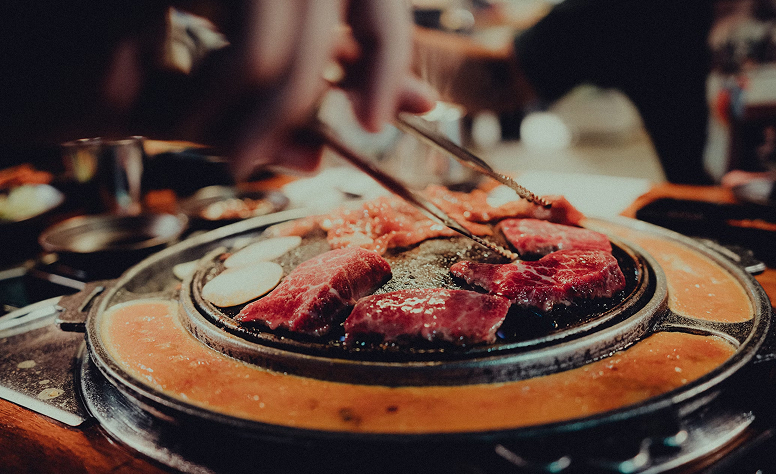
1. Start With The Right Cuts
Common choices include beef (bulgogi), pork belly (samgyeopsal), and short ribs (galbi).
Traditionally, beef is prized for special occasions, while pork is the go-to for casual dining.
In Seoul, thinly sliced brisket (chadolbaegi) is especially popular because it cooks quickly and pairs perfectly with cold soju.
2. Mind The Grill Order
Always grill beef first, then pork, and finally seafood or spicy marinated meats. This prevents stronger flavors from overpowering milder ones.
If the grill surface becomes too charred, politely ask for it to be changed. Most Korean BBQ restaurants will do so happily.
3. Don’t Overcrowd The Grill
Overloading the grill causes uneven cooking and smoking. It’s better to cook smaller batches so the meat caramelizes beautifully.
As The New York Times food section explains, the joy of Korean BBQ lies in the leisurely pace: grill, eat, chat, repeat.
4. Use Tongs, Not Chopsticks
Only the grill master uses tongs to handle raw meat. Everyone else should use chopsticks only for cooked food. Mixing the two can seem unhygienic.
5. Serving Others First
When the meat is ready, offer it to others before taking your share. In Korean culture, this act of generosity represents warmth and humility.
Wrap the meat in lettuce or perilla leaf (ssam), add rice, garlic, a dab of ssamjang (spicy bean paste), and serve it directly onto someone’s plate
6. Don’t Waste Side Dishes (Banchan)
The array of small dishes, kimchi, pickled radish, seaweed, and more, is meant for sharing.
You can ask for refills (most restaurants offer them free), but take only what you’ll eat to show respect for the food.
What Are Some Eating Etiquette In Korean BBQ?

Once the grill is going, the next part of etiquette is knowing how to eat gracefully. Then, you will be able to handle everything from managing chopsticks to balancing flavors.
Eating at a Korean BBQ table is less about having your own plate and more about participating in a communal experience.
Each bite is a shared celebration of taste and togetherness.
These are the few etiquette points you need to remember at the Korean BBQ dining table:
1. Chopstick Manners and Table Behavior
Korean chopstick etiquette is quite specific:
- Don’t stick chopsticks upright in rice. It resembles a ritual offering at funerals.
- Avoid pointing with your chopsticks or waving them while talking.
- Lay your chopsticks neatly on a rest or across your bowl when not using them.
- It’s also polite to chew quietly and avoid reaching across the table. If you need something far away, ask politely or use the tongs provided for shared dishes.
2. Balancing Flavors
Korean BBQ is a harmony of contrasts — savory meat, spicy sauces, fresh vegetables, and tangy banchan.
The best diners know how to balance these flavors rather than overpower one with another.
A small sip of soju or a spoon of cool soup (naengmyeon or doenjang jjigae) often follows each wrap, cleansing the palate.
3. Seating and Social Hierarchy
Traditionally, the eldest or highest-ranking person sits farthest from the entrance, a position of respect.
Younger guests or subordinates sit closer to the door. When seated, wait for the oldest person to lift their chopsticks before beginning your meal.
These unspoken gestures maintain social harmony and honor hierarchy, echoing centuries of Confucian influence in Korea.
What Are Some Important Drinking Etiquette At Korean Bbq?

No Korean BBQ is truly complete without soju. Korea’s beloved clear spirit, or a shared round of beer (maekju).
Drinking etiquette plays a major role in Korean BBQ culture and reflects respect, hierarchy, and connection among diners.
In Korea, alcohol isn’t just consumed; it’s shared, and how you share it matters just as much as the drink itself.
1. Never Pour Your Own Drink
In Korea, pouring your own drink is considered impolite and lonely. You should always pour for others, starting with the oldest or most senior guest. When someone pours for you, hold your glass with both hands — one supporting the bottom — and slightly bow your head as a sign of gratitude.
2. Turn Away When Drinking With Elders
One of the most distinct Korean customs is turning your head slightly away from elders or superiors when taking a sip. This subtle act shows humility and respect, especially in formal or workplace gatherings.
3. Pour Generously But Mindfully
Keep an eye on others’ glasses; it’s good manners to offer refills before they’re empty. However, don’t pressure anyone to drink — while social drinking is common, Korean etiquette emphasizes consideration above all.
4. Mixing Drinks: The Famous Somaek
A popular modern practice is mixing soju and beer to create somaek (소맥). The perfect ratio, about 3 parts beer to 1 part soju, varies depending on taste.
Younger generations enjoy crafting elaborate toasts and “bomb shots,” a playful contrast to the formality of traditional settings.
According to The Korea Herald and KTO, drinking in Korea is seen as a way to strengthen social bonds, but it’s guided by respect.
Additionally, the act of pouring, receiving, and toasting together turns alcohol into a tool for connection rather than indulgence.
What Are Some Common Mistakes To Avoid At Korean BBQ?

Even seasoned diners occasionally break unwritten rules at a Korean BBQ table. Here are the most frequent missteps — and how to avoid them — so you can dine like a pro.
1. Overcrowding Or Burning The Grill Is A Huge NO!
Patience is key. Don’t pile too much meat at once; it lowers the heat and ruins the texture.
So, you have got to wait! Wait until the first batch is perfectly caramelized. Then, you can keep adding more.
2. Don’t Grab The Tongs Without Asking!!!
Unless you’re the grill master or have been invited to take over, it’s best to keep your hands off the tongs. Jumping in uninvited can come across as disrespectful or impatient.
3. Raw Meat? Use Chopsticks Please!
A major no-no. Always use tongs for raw meat and chopsticks only for cooked food to maintain hygiene and proper etiquette.
4. Do NOT Double Dip
Each sauce dish is meant for individual use. If you’re sharing, use the back end of your chopsticks to take a portion onto your plate before dipping.
5. Ignoring The Elders Is A Huge Red Flag
Forgetting to serve or pour drinks for your seniors is one of the quickest ways to seem impolite in Korean culture.
Additionally, you must always check if the oldest or highest-ranking person has food and drink before serving yourself.
6. Eating Too Quickly? What’s The Rush?
Korean BBQ is meant to be a slow, social meal. Eating too fast or dominating the grill disrupts the shared rhythm of the experience.
7. Wasting Side Dishes Or Meat?
Koreans value food highly, and wasting it is frowned upon. Order and eat thoughtfully. You can always ask for refills, but over-ordering just to leave food behind can seem disrespectful.
Modern vs. Traditional Korean BBQ Etiquette: A Detailed Comparison

Korean BBQ has evolved dramatically over the decades. What once began as a communal family meal rooted in Confucian values has transformed into a global dining trend — casual, lively, and often experimental.
1. Traditional Etiquette
Traditional Korean BBQ, still followed in homes and older restaurants, emphasizes hierarchy and ritual:
- The eldest person is served and eats first.
- Alcohol consumption follows strict respect rules — younger guests pour and turn away when drinking.
- There’s minimal noise or excessive laughter during meals, reflecting formality and decorum.
- Everyone participates in maintaining harmony — waiting, serving, and sharing with care.
- According to the Korea Tourism Organization, these customs emerged from agricultural communities where meals symbolized cooperation and gratitude for the harvest.
2. Modern Etiquette
Today’s younger generations, especially in Seoul’s trendy BBQ joints, have adapted the old customs into a more relaxed, egalitarian approach:
- Friends often take turns at the grill.
- Toasts are louder and more playful, especially when soju bombs come out.
- Self-serve side dish stations and casual clothing are the norm.
- Elders still receive respect, but the boundaries are softer and more about friendliness than formality.
- Many restaurants outside Korea, particularly in the U.S. and Australia, blend these approaches. It maintains respect for tradition while embracing a relaxed, social atmosphere.
- As The New York Times highlights, this balance is what makes Korean BBQ so globally appealing — it’s both deeply cultural and incredibly fun.
What Are Some Popular Regional Variations In Korean BBQ Etiquette?

While most etiquette rules are universal, small regional differences give Korean BBQ its fascinating variety.
- Seoul: Focuses on premium beef cuts like hanwoo and thin-sliced brisket, emphasizing precision and clean flavors. Etiquette leans formal here, reflecting the capital’s fast yet polished lifestyle.
- Jeolla Province: Known for generosity and bold flavors, meals here often include a lavish spread of banchan. Sharing is emphasized even more strongly.
- Busan: As a coastal city, Busan BBQ often features seafood on the grill, like octopus, shellfish, or shrimp. Locals are famously friendly, and etiquette is more relaxed.
- Gangwon Province: Due to its mountainous terrain, BBQ here often includes hearty pork and wild herbs, with a family-style setting that values closeness over formality.
Exploring these regional nuances reveals how deeply Korean BBQ etiquette connects to geography, hospitality, and tradition.
Korean Barbeque Etiqette Explained
Korean BBQ isn’t just about grilled meat. It’s a social ritual that reflects Korea’s values of respect, community, and generosity.
Whether you’re at a sleek Seoul restaurant or a neighborhood grill abroad, following etiquette enhances not only the dining experience but also your appreciation of Korean culture.
Here are your final etiquette takeaways:
- Respect elders and let them lead the meal.
- Serve others before serving yourself.
- Don’t rush; Korean BBQ is meant to be enjoyed slowly.
- Keep the grill clean and the conversation warm.
- When in doubt, observe how locals behave. Korean dining culture is gracious, not rigid.
If you approach the meal with humility and curiosity, you’ll not only master Korean BBQ etiquette but also experience the essence of jeong. It is the uniquely Korean feeling of heartfelt connection through shared food.
Frequently Asked Questions (FAQs)
Have queries? Not to worry! I am here to answer all of them!
It’s a set of customs and manners that guide how people cook, eat, and drink together at a Korean BBQ table. It centers around respect, sharing, and harmony.
Typically, one person (the grill master) handles the grilling using tongs and scissors. Cook meats evenly, serve others first, and avoid overcrowding the grill.
Yes, for wrapping ssam (lettuce wraps), using your hands is fine. But avoid touching shared dishes or raw meat directly.
Using chopsticks on raw meat, double-dipping sauces, grilling too much at once, and not serving elders first are key etiquette mistakes to avoid.
Yes. It’s polite to offer refills before glasses are empty, but never pour your own drink. Always use both hands when serving or receiving alcohol.
Usually, the host or most experienced person becomes the grill master. If you’re new, wait to be invited before taking charge.
Absolutely. Most restaurants offer banchan refills for free. Just request politely and avoid wasting food.
Hold your glass with both hands, say “geonbae!,” and slightly turn your head away from elders while drinking.
Start with lighter meats like beef brisket before moving to pork or spicy marinades. Balance flavors with side dishes and soups.
Watch and follow the locals. Be polite, offer to help serve, and express appreciation for the meal. Koreans value effort and sincerity over perfection.
Share This Article:


RELATED POST